Diego var en 21-årig student från Guadalajara som kämpade för att få ekonomin att gå ihop och tog ströjobb för att betala för mat och transport. En dag hittade han ett litet jobb där han hjälpte en äldre kvinna vid namn Carmen att städa en gång i veckan. Inkomsten gjorde att han kunde få ekonomin att gå ihop, så han gick omedelbart med på det.
Men när Diego började besöka Carmen upptäckte han att Carmen bodde ensam och knappt åt. Hennes barn besökte henne nästan aldrig, men hon försvarade dem när han frågade om dem. Av medlidande började Diego använda sina egna pengar för att köpa matvaror åt henne, laga mat åt henne, ta henne till sjukhuset och umgås med henne efter städningen.
Veckor blev till månader, men Carmen betalade honom fortfarande inte. Hans vänner kallade honom galen och sa att han utnyttjade henne. Ibland trodde Diego på dem, särskilt när han kom hem hungrig och utan pengar. Ändå, oavsett hur mycket han försökte stoppa hennes besök, kunde han inte lämna henne ensam. Sedan en oktobermorgon kom Diego till hennes hus och fick veta att Carmen hade dött. Hennes barn dök plötsligt upp på begravningen och låtsades följa henne med kärlek och hängivenhet. Under tiden förblev Diego tyst i skuggorna, övertygad om att allt han hade gjort för henne var över.
Men efter begravningen gav en granne honom ett kuvert med Carmens namn skrivet på det med hennes skakiga handstil. I samma ögonblick som han såg det insåg han att Carmens sista ord snart skulle krossa den bild som hans familj hade vårdat i åratal.
Läs mer i kommentarerna. 
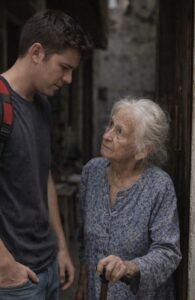
After Carmen’s funeral, Diego receives a secret envelope from a neighbor. Inside is a trembling handwritten letter, a brass key, and instructions to visit a notary. Back in his tiny rented room, he reads Carmen’s shocking words: “My children left me alive long before they buried me.” She explains that her children abandoned her for years, only returning when they needed money or signatures. She tells Diego about hidden documents inside her house and warns him not to trust anything her family says after her death.
The next morning, Diego returns to Carmen’s house with neighbor Doña Elisa. Her children are already there, treating the home less like a place of grief and more like an inheritance to divide. Pretending he came for an old backpack, Diego secretly retrieves a red tin box and important papers hidden inside Carmen’s cedar chest while her daughter Marcela watches suspiciously.
At the office of notary Mauricio Salazar, everything changes. The hidden box contains bank records, receipts, and evidence that Carmen’s children had been stealing money from her pension for years while neglecting her care. Then Salazar reveals the biggest shock of all: Carmen left her entire house and savings account to Diego.
Diego is speechless. He spent months believing he was a fool for helping an old woman who never paid him, while Carmen had quietly been documenting everything. She recorded video testimony accusing her children of abandoning and exploiting her. In the video, Carmen says Diego showed her more kindness than her own family ever did. “He entered my house with empty pockets and full hands,” she says. “People may call him foolish, but sometimes fools are the last honest people left.”
Her children immediately fight the will. They accuse Diego of manipulating a lonely elderly woman for money. But Salazar presents overwhelming evidence: hospital records showing Diego as Carmen’s emergency contact, witnesses describing her neglect, pharmacy footage proving her son used her money for alcohol instead of medication, and recorded phone calls exposing the children’s cruelty.
The legal battle drags on for months while Diego struggles to balance classes, jobs, and court hearings. Carmen’s children try to shame him for being poor and “just a student,” hoping nobody will believe someone like him deserved such an inheritance. But the deeper the case goes, the uglier their actions become.
Finally, the judge upholds Carmen’s will completely.
Diego officially inherits the house. But instead of triumph, he mostly feels grief. Cleaning the old home, he discovers hidden notes Carmen left for him throughout the house—small messages thanking him, teasing him, and admitting she knew he was sometimes angry about never being paid. One note says: “Being chosen by someone abandoned is not theft. It is evidence.”
Slowly, Diego repairs the house and rebuilds his life. The inheritance gives him stability for the first time: no more starving through school or counting bus coins just to survive. But instead of selling the property, he transforms it into “Thursday House,” a quiet study space for struggling students and a place where people can receive help, advice, and support.
On the anniversary of Carmen’s death, Diego cooks soup in her old kitchen and realizes her final gift was never really the money or the house. It was the proof that kindness matters, even when the world calls it stupidity.
Because in the end, Carmen’s children inherited shame.
And Diego inherited her trust.